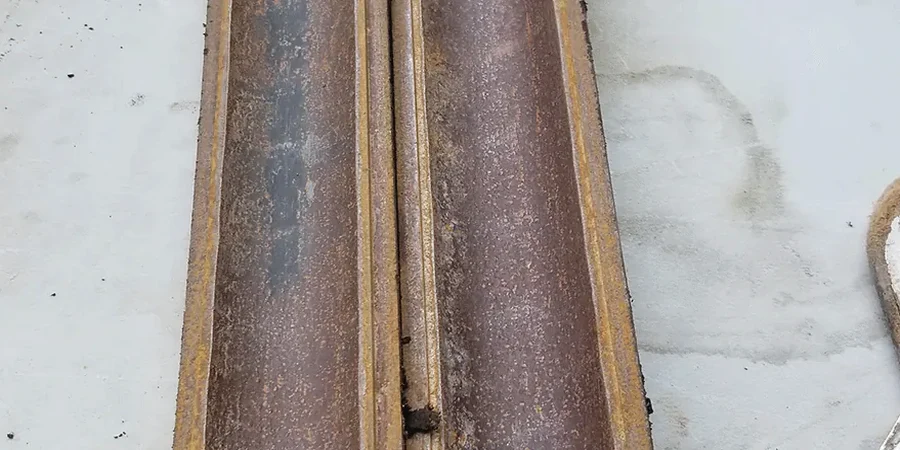
The difference between building on the firm alluvial fans near the Santa Cruz Mountains versus the younger bay muds along the Sunnyvale waterfront is night and day. In the older deposits near downtown Sunnyvale, you might find dense sands and stiff clays that hold up well. But over near the Moffett Park area and closer to the bay, soft, compressible clay layers dominate the subsurface. That’s exactly where undisturbed sampling (Shelby tube) becomes indispensable. Standard penetration tests give you blow counts, but they cannot preserve the delicate structure of these sensitive clays. Our Shelby tube sampling extracts intact cores so the lab can run consolidation, triaxial, and unconfined compression tests on truly representative specimens. Without that sample quality, you are essentially guessing at settlement behavior under the proposed slab loads.
Shelby tube sampling preserves the in-situ structure of soft clays and sensitive silts, enabling reliable consolidation and strength parameters for foundation design in Sunnyvale.
Method and coverage
Sunnyvale sits at an average elevation of just 130 feet above sea level, with groundwater often encountered within 10 to 15 feet of the surface in the eastern neighborhoods. That shallow water table makes the native silty clays and clayey silts highly susceptible to disturbance during drilling. We follow ASTM D1587-15 strictly when deploying Shelby tubes, using a thin-walled stainless steel sampler with an area ratio under 10 percent. The key is a steady, continuous push at a rate of 1 to 2 feet per minute, without rotation or hammering. Before sealing and transporting each tube, we measure recovery length and document soil description on site. For projects on the soft bay deposits, we often recommend pairing this sampling with granulometry (sieve and hydrometer) to fully characterize gradation and plasticity, which directly affects the Atterberg limits and consolidation parameters needed for foundation design.
Technical reference image — Sunnyvale
Regional considerations
The young bay muds underlying large portions of Sunnyvale are notoriously problematic for shallow foundations. These soft clays — often classified as CL or CH under USCS — exhibit high compressibility and low undrained shear strength, sometimes falling below 500 psf in the upper layers. When you disturb the sample during extraction, the measured preconsolidation pressure drops and settlement predictions become unreliable. Even a 5 percent strain from poor handling can shift oedometer results by 20 percent or more. That error directly impacts the factor of safety against excessive total or differential settlement, which for a warehouse slab or a tilt-up building can mean the difference between a serviceable structure and a costly repair within the first decade.
Limited by rig capacity and soil conditions; typically up to 100 ft
Related services
01
Shelby Tube Sampling & Field Support
Our field technicians deploy 3-inch and 2.8-inch Shelby tubes using hydraulic push rigs, ensuring minimal disturbance. We document recovery, handle and seal tubes per ASTM standards, and transport them chilled to the lab within 24 hours.
02
Consolidation (Oedometer) Testing
From the undisturbed cores, we run incremental load consolidation tests to determine preconsolidation pressure, compression index, and coefficient of consolidation — critical parameters for estimating settlement in Sunnyvale's soft bay deposits.
03
Triaxial Shear Strength (UU/CU)
We perform unconsolidated-undrained and consolidated-undrained triaxial tests on Shelby tube samples to obtain undrained shear strength and effective stress parameters. These are directly used in slope stability and bearing capacity analyses.
Standards that apply
ASTM D1587-15 (Standard Practice for Thin-Walled Tube Sampling of Fine-Grained Soils), ASTM D2435/D2435M (Standard Test Methods for One-Dimensional Consolidation Properties of Soils), ASTM D2850-15 (Standard Test Method for Unconsolidated-Undrained Triaxial Compression Test on Cohesive Soils), ASTM D2166/D2166M (Standard Test Method for Unconfined Compressive Strength of Cohesive Soil)
Top questions
How do you ensure sample quality during Shelby tube sampling in Sunnyvale?
We follow ASTM D1587-15 to the letter. The tube is pushed hydraulically at a steady rate of 1 to 2 feet per minute without any rotation or percussion. We measure recovery immediately after extraction, seal both ends with wax and plastic caps, and keep the tube upright and cool during transport. The goal is to preserve the in-situ moisture content, void ratio, and soil fabric so that lab results reflect actual site conditions.
What is the typical cost range for undisturbed sampling (Shelby tube) in Sunnyvale?
For a standard Shelby tube sampling run, including mobilization of the rig and a single tube advance, clients can expect a range between US$440 and US$1,040 per tube. The final cost depends on depth, access conditions, and whether additional laboratory testing is bundled. We provide a detailed quote before any fieldwork begins.
Which projects in Sunnyvale most commonly require Shelby tube sampling?
Any project involving soft or sensitive fine-grained soils — think multi-story buildings near El Camino Real, tilt-up warehouses in the Moffett Park industrial area, or infrastructure like stormwater basins near the bay. If you are designing a mat foundation or dealing with compressible clay layers deeper than 10 feet, undisturbed sampling is typically specified by the geotechnical engineer to obtain reliable consolidation parameters.