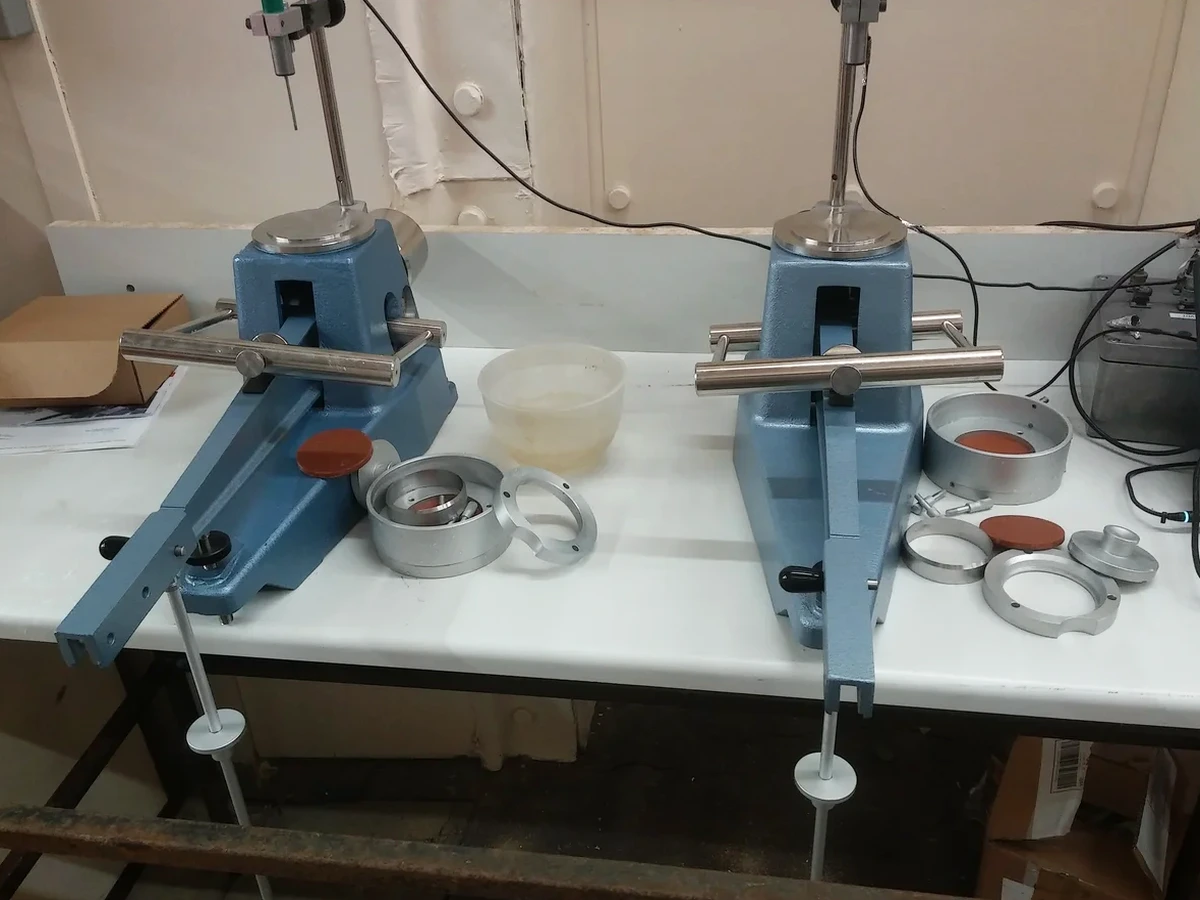
Geotechnical laboratory testing forms the backbone of any successful construction or infrastructure project in Sunnyvale, California. This category encompasses a suite of standardized tests designed to determine the physical and mechanical properties of soil and rock. From evaluating a soil's load-bearing capacity to predicting its behavior under varying moisture conditions, these analyses provide the critical data engineers need to design safe, stable, and durable foundations, pavements, and earthworks. In a seismically active region like the Bay Area, the precision offered by a controlled laboratory environment is not just a convenience; it is an absolute necessity for mitigating risk and ensuring public safety.
Sunnyvale's geological profile presents unique challenges that demand rigorous laboratory investigation. Much of the city is underlain by Quaternary alluvial deposits, clays, and silts associated with the Santa Clara Valley basin, often intermixed with artificial fill. These soils can be highly variable, with pockets of expansive clay or loose, compressible layers. Near the bay, the risk of encountering Bay Mud—a notoriously weak and highly compressible estuarine deposit—is significant. A thorough soil mechanics study is essential to characterize these materials, as their behavior cannot be reliably predicted by field observations alone. Understanding the specific properties of these local soils is critical for addressing issues like settlement, lateral spreading, and slope stability.
Laboratory testing protocols in Sunnyvale must conform to stringent national and state standards, primarily those established by ASTM International and Caltrans (California Department of Transportation). Key methods include ASTM D2166 for the unconfined compression test (UCS), which measures the shear strength of cohesive soils, and ASTM D1883 for the laboratory CBR test, vital for pavement design. For earthwork and compaction control, the Proctor test (Standard or Modified) per ASTM D698/D1557 defines the optimal moisture-density relationship. Furthermore, the Atterberg limits test (ASTM D4318) is indispensable for classifying fine-grained soils and predicting their shrink-swell potential, a common concern with Sunnyvale's clay-rich strata. Adherence to these standards ensures data is defensible, reproducible, and accepted by local building departments.
The range of projects that depend on these laboratory services is vast. High-density residential and commercial developments rely on UCS and consolidation tests for deep foundation design, while public works projects, from road widening on El Camino Real to new school construction, require CBR and Proctor tests for durable pavements and compacted fill. Technology campus expansions, a mainstay of Sunnyvale's economy, necessitate comprehensive soil mechanics studies to prevent costly post-construction settlement of sensitive manufacturing facilities. Even smaller-scale projects like retaining walls or pool installations benefit from Atterberg limits and strength testing to avoid structural distress caused by expansive soils.
Field tests provide valuable in-situ data on density and stratigraphy but cannot directly measure fundamental engineering properties like shear strength, compressibility, or optimum moisture content under controlled conditions. Laboratory testing on undisturbed samples is essential to quantify these parameters using standardized methods, allowing engineers to model soil behavior accurately for foundation and earthwork design.
The key difference lies in the compaction effort applied. The Standard Proctor (ASTM D698) uses a 5.5-lb hammer dropped 12 inches, simulating moderate compaction. The Modified Proctor (ASTM D1557) uses a 10-lb hammer dropped 18 inches, replicating the greater effort of modern heavy rollers. The Modified test typically yields a higher maximum dry density and a lower optimum moisture content.
The necessary suite of tests is determined by the project's scope, the geotechnical engineer's preliminary findings, and local building department requirements. A geotechnical engineer will design a testing program based on the subsurface conditions encountered during the site investigation, the proposed structural loads, and the specific risks identified, such as expansive soils or Bay Mud deposits common to the area.
Atterberg limits are moisture content thresholds that define the consistency states of fine-grained soils: liquid limit, plastic limit, and shrinkage limit. They are critical for classifying silts and clays and are directly used to assess a soil's potential for volume change. A high plasticity index, derived from these limits, is a strong indicator of expansive soil that can damage foundations with seasonal moisture fluctuations.
We serve projects across Sunnyvale.