Sunnyvale sits atop the deep alluvial deposits of the Santa Clara Valley, a setting where the water table often sits just a few feet below grade and the soil profile alternates between soft clays, loose sands, and silty layers. For any tunnel project in this city, the geotechnical analysis for soft soil tunnels must start with a site investigation that follows ASTM D1586 for standard penetration testing and ASTM D2487 for unified soil classification. The challenge here is that even a modest tunnel diameter of 3 to 5 meters can encounter significant settlement risks if the soil behavior is not characterized with precision. Before the tunnel alignment is finalized, we typically run a MASW survey to map shear-wave velocity variations across the site, which helps define the seismic site class per ASCE 7. The combination of high groundwater and low-strength soils makes Sunnyvale a textbook case for why early-stage geotechnical analysis for soft soil tunnels is not optional but essential.
Soft alluvial soils in Sunnyvale can settle more than 5 cm under tunnel excavation if the undrained shear strength falls below 25 kPa.
Method and coverage
On a typical Sunnyvale tunnel project, the field team mobilizes a track-mounted drill rig capable of reaching 30 to 40 meters depth, equipped with hollow-stem augers for continuous sampling. We collect undisturbed tube samples from the soft clay layers using thin-wall Shelby tubes (ASTM D1587) and split-spoon samples for SPT blow counts. The lab work then focuses on:
Consolidation tests (ASTM D2435) to estimate long-term settlement under tunnel overburden.
Triaxial CU tests (ASTM D4767) on undisturbed specimens to define undrained shear strength.
Atterberg limits (ASTM D4318) to classify plasticity and identify potential for volume change.
Permeability tests (falling-head method) to evaluate groundwater inflow rates into the tunnel face.
Each of these parameters feeds directly into the numerical models we build for the geotechnical analysis for soft soil tunnels in Sunnyvale. The soil here is notoriously variable — a borehole 20 meters away can show completely different fines content — so the sampling density must be higher than what a standard building foundation would require.
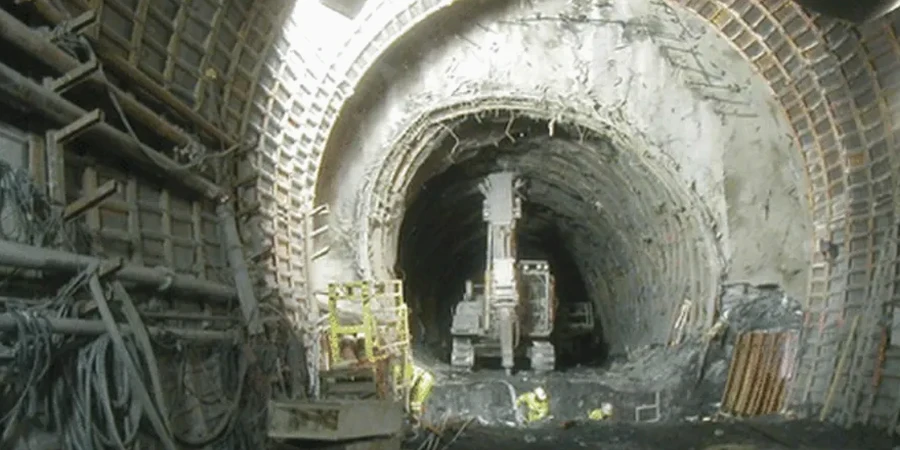
Technical reference image — Sunnyvale
Regional considerations
The Mediterranean climate of the Bay Area brings wet winters that recharge the shallow aquifer, raising the water table in Sunnyvale to near the surface during the rainy season. This seasonal fluctuation introduces a major risk: during tunnel construction, the pore pressure in the soft clay can rise quickly, reducing effective stress and triggering face instability. In our experience, the most common failure mode in Sunnyvale's soft soils is a combination of bottom heave and surface settlement troughs that can damage adjacent utilities. Proper geotechnical analysis for soft soil tunnels must account for these transient groundwater conditions, and we always recommend installing vibrating-wire piezometers at multiple depths along the tunnel alignment to monitor pore pressure in real time. The city's proximity to the San Andreas Fault system also imposes seismic loading considerations that amplify the liquefaction potential in the loose sand lenses.
Detailed borehole logging and subsurface profiling along proposed tunnel routes in Sunnyvale, with emphasis on identifying soft clay lenses, sand seams, and groundwater levels that control excavation behavior.
02
Settlement and Heave Analysis
Numerical modeling of expected ground movements during tunnel excavation, including surface settlement troughs and bottom heave in soft soils. We calibrate the models using consolidation and triaxial test data from Sunnyvale samples.
03
Improvement Recommendations
Evaluation of techniques such as jet grouting, deep soil mixing, or compensation grouting to stabilize soft zones before tunneling. Each recommendation is site-specific and backed by laboratory mix designs.
Standards that apply
ASTM D1586-18 (Standard Penetration Test), ASTM D4767-11 (Consolidated Undrained Triaxial Test), ASCE 7-22 (Minimum Design Loads, Section 11: Seismic), IBC 2021 (Chapter 18: Soils and Foundations), FHWA-NHI-09-010 (Technical Manual for Design and Construction of Road Tunnels)
Top questions
What makes geotechnical analysis for soft soil tunnels in Sunnyvale different from other cities?
Sunnyvale's soil profile consists of young alluvial deposits with high plasticity clays and loose sands, often saturated within 2 meters of the surface. The combination of high groundwater and low shear strength requires more sophisticated numerical modeling and higher sampling density than typical rock tunnels. The seismic setting of the Bay Area also adds a liquefaction assessment component that is not always needed in other regions.
How much does a geotechnical analysis for soft soil tunnels cost?
A comprehensive geotechnical analysis for a soft soil tunnel in Sunnyvale typically ranges between US$3.980 and US$18.390, depending on the length of the tunnel alignment, number of boreholes, laboratory testing volume, and whether advanced numerical modeling (FEM) is required. The final cost is determined after the initial site walk and scope definition.
What settlement can be expected during tunnel excavation in Sunnyvale's soft soils?
For a typical 4-meter diameter tunnel in the soft clays of Sunnyvale, surface settlements can range from 2 to 8 cm, depending on the undrained shear strength and the tunneling method used. With proper geotechnical analysis and Improvement, settlements can be kept below 2.5 cm in most cases. Real-time monitoring using settlement markers and inclinometers is always recommended.
Which ASTM standards apply to soft soil tunnel investigations?
The key standards are ASTM D1586 for SPT, ASTM D4767 for consolidated undrained triaxial tests, ASTM D2435 for consolidation tests, and ASTM D4318 for Atterberg limits. For seismic site classification, we also rely on ASTM D4428 for MASW surveys and ASCE 7 for determining the site class (typically D or E in Sunnyvale).