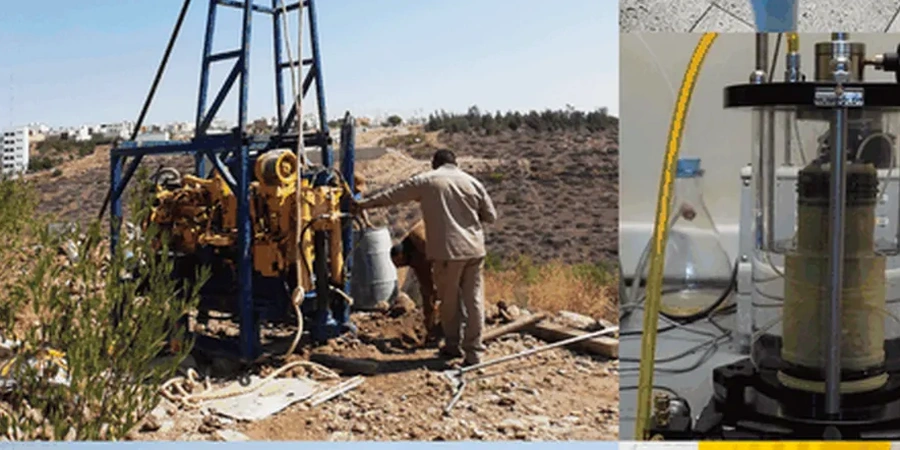
The Flat Dilatometer Test (DMT) is performed following ASTM D6635 standards to measure in-situ lateral stress, modulus, and soil stratification with high precision. In Sunnyvale, where alluvial deposits from the Santa Clara Valley create complex sequences of silty sands and soft clays, the DMT provides critical data for settlement analysis and foundation design. The test involves pushing a steel blade into the ground and inflating a membrane to record pressures at multiple depths, yielding immediate results that complement traditional penetration tests. When combined with a study of expansive soils or a seismic microzonation for the region, the DMT helps engineers tailor foundation solutions to the specific ground conditions found along the Bay Area's earthquake-prone terrain.
The DMT's ability to estimate K0 directly from membrane expansion makes it invaluable for predicting lateral earth pressures in Sunnyvale's alluvial soils.
Method and coverage
The DMT equipment used in Sunnyvale consists of a stainless steel blade 95 mm wide and 15 mm thick, connected to a control unit that reads A-pressure and B-pressure during membrane inflation. A typical setup includes a drill rig with hydraulic push capacity of at least 20 tons to advance the blade at 20 mm/s while readings are taken every 200 mm. The test produces the material index (ID), horizontal stress index (KD), and dilatometer modulus (ED), which are then interpreted to estimate constrained modulus (M), undrained shear strength (Su), and coefficient of earth pressure at rest (K0). For projects requiring unconfined compression strength data alongside DMT results, we integrate both methods to cross-check parameters, ensuring consistency across the geotechnical model. The entire operation is mobile and causes minimal disturbance to existing structures or landscaping in Sunnyvale's residential lots.
Technical reference image — Sunnyvale
Regional considerations
Sunnyvale sits atop deep Quaternary alluvium with groundwater levels typically between 2 and 6 meters below grade, conditions that can lead to liquefaction during seismic events. The DMT's ability to detect thin interbedded layers of loose sand or soft clay is critical because these layers govern settlement and bearing capacity. Without a high-resolution profile, a foundation might overlook a 0.3 m soft zone that would cause differential movement under load. The test also identifies overconsolidated layers from historical desiccation, which can significantly increase bearing capacity if properly accounted for in design.
On-site execution of the Flat Dilatometer Test with real-time digital data acquisition, including A-pressure, B-pressure, and membrane calibration corrections. Our technicians follow ASTM D6635 procedures and provide raw data files for independent review.
02
DMT Interpretation & Geotechnical Report
Detailed analysis of DMT parameters to estimate constrained modulus, K0, undrained shear strength, and overconsolidation ratio. The report includes soil profiles, design parameters, and recommendations for shallow and deep foundations in Sunnyvale.
03
DMT for Seismic Site Response
Combined DMT and shear wave velocity measurements to classify site class per ASCE 7-22. The test helps identify liquefaction-prone layers and provides modulus reduction curves for dynamic analysis in Santa Clara Valley.
Standards that apply
ASTM D6635-15, ASCE 7-22 (Seismic Load Provisions), IBC 2021 (International Building Code), FHWA NHI-05-037 (Geotechnical Engineering Circular No. 5)
Top questions
What is the difference between DMT and CPT for soil characterization in Sunnyvale?
Both tests measure in-situ soil properties, but the DMT directly estimates horizontal stress (K0) and constrained modulus (M) by inflating a membrane, while the CPT measures cone resistance and sleeve friction. In Sunnyvale's interbedded alluvium, the DMT provides better resolution of thin soft layers that affect settlement, whereas the CPT gives continuous stratigraphic profiling. We often recommend both for critical projects.
How much does a Flat Dilatometer Test cost in Sunnyvale?
The typical cost for a DMT in Sunnyvale ranges from US$830 to US$1,120, depending on depth, number of test points, and site accessibility. This includes mobilization, field testing, data interpretation, and a summary report. Volume discounts apply for multiple test locations on the same project.
Can DMT be performed in soft clays or loose sands common in Sunnyvale?
Yes, the DMT is particularly effective in soft to medium clays and loose sands, which are prevalent in the alluvial deposits of Sunnyvale. The blade can penetrate these materials with minimal disturbance, and the membrane inflation responds to very low stress levels. For very dense or cemented layers, we may pre-drill to avoid blade damage.