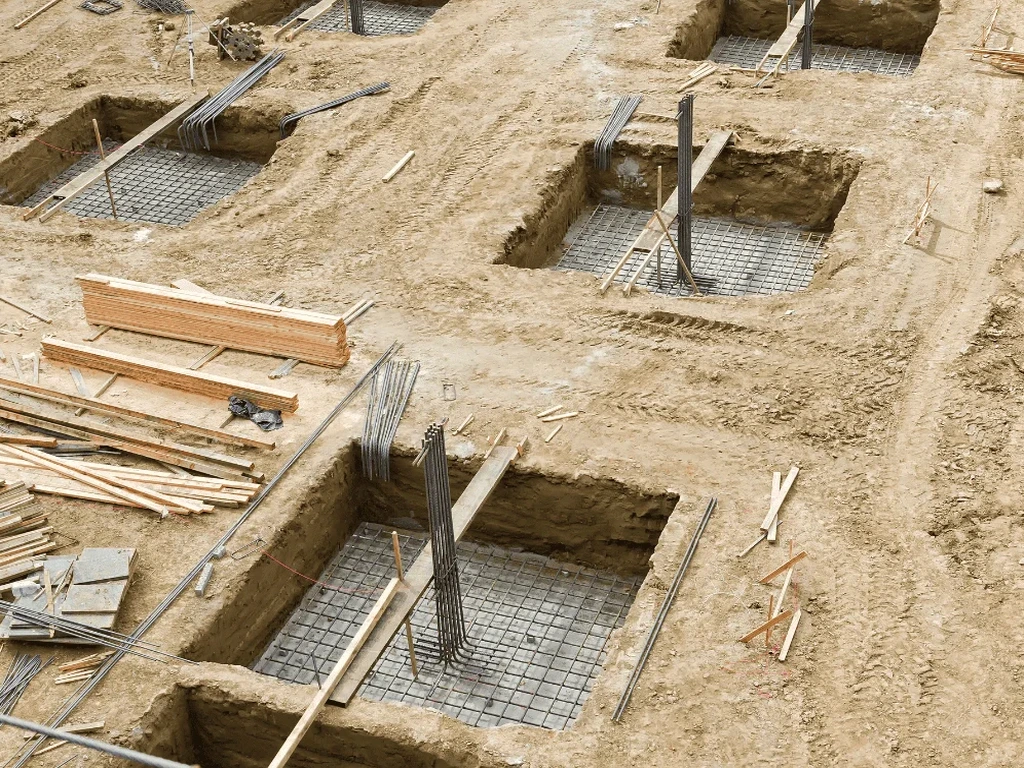
Foundations represent the critical interface between any structure and the earth beneath it, and in Sunnyvale, California, this connection demands particular attention. The city's location in the heart of Silicon Valley, combined with its proximity to major fault lines and areas of problematic soils, makes foundation engineering a discipline that directly impacts public safety, property value, and long-term structural performance. Whether you are planning a single-family home, a multi-story commercial building, or an industrial facility, the foundation system must be carefully tailored to resist seismic forces, accommodate soil movement, and comply with rigorous local codes. A properly designed foundation does more than just support vertical loads; it anchors the building against lateral earthquake shaking and isolates it from ground deformation that can compromise structural integrity over time.
Sunnyvale sits on the Santa Clara Valley floor, an alluvial basin filled with sediments deposited by historic waterways flowing from the Santa Cruz Mountains toward San Francisco Bay. Much of the city is underlain by Pleistocene and Holocene alluvium, which varies from well-drained sandy gravels to thick layers of compressible clay. A significant concern in many neighborhoods is the presence of expansive soils, particularly those derived from the weathering of Franciscan Complex bedrock and transported materials from surrounding hills. These clays can swell dramatically when wet and shrink when dry, exerting differential pressures on footings and slabs. Our local expansive soil evaluation services address this hazard by quantifying plasticity indices and providing recommendations for moisture conditioning or structural isolation.
California's regulatory framework for foundations is among the strictest in the nation, governed primarily by the California Building Code (CBC), which adopts and amends the International Building Code (IBC). In Sunnyvale, the municipal code enforces additional provisions under Title 16, requiring geotechnical investigations for most new construction and substantial additions. Chapter 18 of the CBC covers soils and foundations, mandating allowable bearing pressures, lateral resistance, and special inspections for deep foundations. Crucially, the CBC references ASCE 7 for seismic design criteria, tying foundation performance directly to mapped spectral accelerations. Given Sunnyvale's location within a seismically active region, designers must consider site class effects that can amplify ground motion, especially in areas with softer soil profiles. Compliance with these standards is not optional; it is a legal requirement verified during the permitting process.
Projects of every scale benefit from specialized foundation engineering, but certain types demand it. Residential developments on infill lots often encounter undocumented fill or high groundwater, requiring reinforced mat slabs or raised pier systems. Mid-rise office buildings in the Peery Park district typically use deep foundations such as drilled piers or driven piles to bypass weak near-surface soils and achieve stability during an earthquake. Essential facilities, including fire stations and hospitals, must meet higher occupancy categories with more conservative foundation designs. For any structure where life safety is a concern, seismic foundation design becomes a non-negotiable component, integrating site-specific hazard analysis with structural engineering to prevent collapse or excessive deformation during a major event.
The two dominant concerns are expansive clays and loose alluvial deposits. Expansive soils, found in many parts of the city, shrink and swell with moisture changes, causing differential movement that cracks slabs and footings. Loose sandy soils in former stream channels may experience settlement under load or even liquefaction during strong seismic shaking, reducing bearing capacity abruptly.
Yes, for most projects. The CBC, as enforced by Sunnyvale's building department, mandates a soil investigation for any structure requiring a building permit, except for very minor works. The report must provide allowable bearing pressure, lateral earth pressure, and seismic design parameters. Without it, the building official cannot approve foundation construction documents.
Seismic design adds lateral load resistance and ductility requirements. Foundations must not only support gravity loads but also transfer inertial forces from the superstructure into the ground without brittle failure. This often means deeper embedment, reinforced concrete piers, grade beams, or pile caps designed with redundancy, and strict adherence to site-specific response spectra per ASCE 7.
It can, but only with specific modifications. A conventional slab-on-grade in expansive soil will likely crack and heave. Mitigation includes over-excavation and replacement with non-expansive fill, moisture barriers, and structural slabs with stiffening beams. Post-tensioned slabs are another solution, but all require a thorough expansive soil evaluation to determine the necessary design parameters.
We serve projects across Sunnyvale.