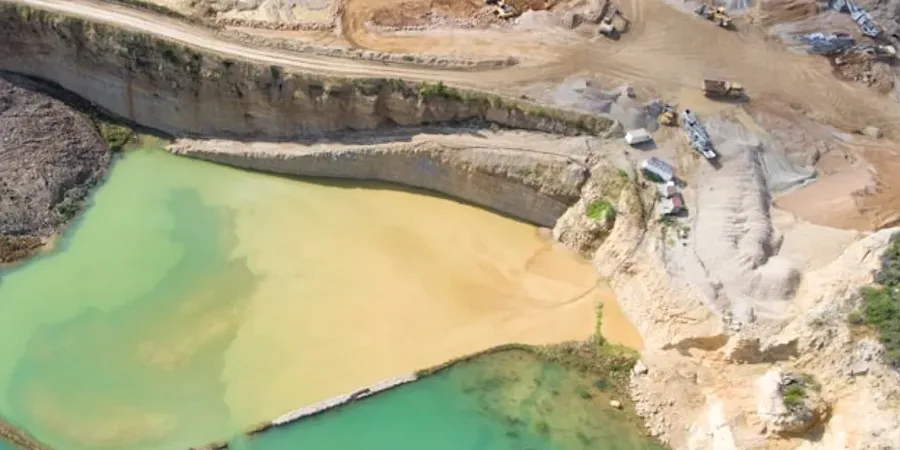
On a recent project near Sunnyvale's Moffett Park, our crew mobilized a fleet of vibrating rollers and a 20-ton excavator to place a 12-foot sand blanket across a 3-acre site. We monitor settlement with real-time inclinometers and pneumatic piezometers, tracking pore pressure dissipation day by day. For deeper profiles, we correlate results with a consolidation test to calibrate the primary compression index (Cc) and coefficient of consolidation (Cv). The process demands continuous coordination with the contractor's schedule and the local utility district, especially when crossing active gas lines near Lawrence Expressway.
Preloading without surcharge relies on precise preconsolidation pressure estimates; misjudging σ'p by 20% can lead to excessive residual settlement.
Method and coverage
Sunnyvale sits on an alluvial plain with interbedded clays and silts from the ancient Coyote Creek floodplain, with groundwater typically at 6 to 12 feet below grade. Preloading design without surcharge works when the required stress increase stays below the preconsolidation pressure (σ'p) of the target layer. We combine field data from an SPT sounding with laboratory oedometer curves to estimate total settlement under fill loads. Key parameters from our analysis:
Technical reference image — Sunnyvale
Regional considerations
A common mistake we see in Sunnyvale is assuming that a single oedometer test from a geotechnical report covers the entire site. The Bay Area's Holocene clays vary laterally within 50 feet — a zone of soft clay near El Camino Real can have Cc values of 0.40, while 200 feet away it drops to 0.18. If you design the preloading fill based on the average, you risk under-compacting the soft pockets and end up with differential settlement at the slab, cracking tilt-up panels or damaging underground utilities. We always recommend a minimum of three consolidation tests per acre.
Installation of settlement plates, pneumatic piezometers, and inclinometers to track real-time pore pressure and vertical deformation during the preloading phase.
02
Laboratory Consolidation Testing
Oedometer tests on undisturbed samples to determine Cc, Cr, Cv, and preconsolidation pressure, following ASTM D2435 with incremental loading up to 16,000 psf.
03
Fill Design & Construction Support
Design of sand blanket geometry (height, staging, drainage) and on-site supervision of placement, compaction, and elevation survey until 90% of primary settlement is achieved.
What is the difference between preloading with surcharge and without surcharge?
Preloading without surcharge uses only the design fill height (no additional temporary load) to achieve the required consolidation. With surcharge, you add extra fill (typically 20-50% above design load) to accelerate settlement and then remove it. Without surcharge, the process is slower but avoids the cost and logistics of importing and removing extra material.
How long does preloading without surcharge take in Sunnyvale's clay soils?
Typical durations range from 60 to 180 days for primary settlement of 6 to 18 inches, depending on the clay's coefficient of consolidation (Cv) and the drainage path length. We can accelerate the rate by installing vertical drains if needed.
What is the typical cost range for a preloading design without surcharge in Sunnyvale?
For a standard 2- to 5-acre site with moderate exploration and monitoring, expect between US$650 and US$2,190. The final price depends on the number of consolidation tests, instrumentation points, and field days required.
Do you need to remove the preloading fill after settlement is achieved?
Not always. If the preloading fill is part of the final grade or landscape berm, you can leave it in place. Otherwise, you must excavate it and replace with structural fill or slab-on-grade, which adds to the project cost.
Can preloading without surcharge handle deep clay layers in Sunnyvale?
Yes, but the time factor becomes critical. For clay layers thicker than 20 feet, primary settlement may take over a year. We often recommend combining preloading with vertical drains (wick drains) to shorten the drainage path and reduce wait time to 3-6 months.