A common mistake we see in Sunnyvale is assuming a standard pavement section will work everywhere. The city sits on a mix of alluvial sands, silty clays, and old bay deposits. Without proper subgrade investigation, designers often overestimate bearing capacity. That leads to premature cracking or rutting. We start every flexible pavement design with a targeted site investigation — usually a few test pits to log soil layers and collect samples for lab classification. This step alone prevents costly redesigns later.
Sunnyvale's alluvial soils vary block to block — a single test pit can save thousands in future pavement repairs.
Method and coverage
Soils near the Lockheed Martin campus tend to be sandy with good drainage. Head toward the Moffett Park area and you hit stiff clay with low permeability. That contrast matters for pavement design. For sandy subgrade, we often use CBR testing to set layer moduli directly. In clay areas, we run Proctor compaction curves to establish optimum moisture targets. A flexible pavement in Sunnyvale must also account for seasonal water table fluctuations — the shallow groundwater in some neighborhoods can weaken unbound bases if not drained properly.
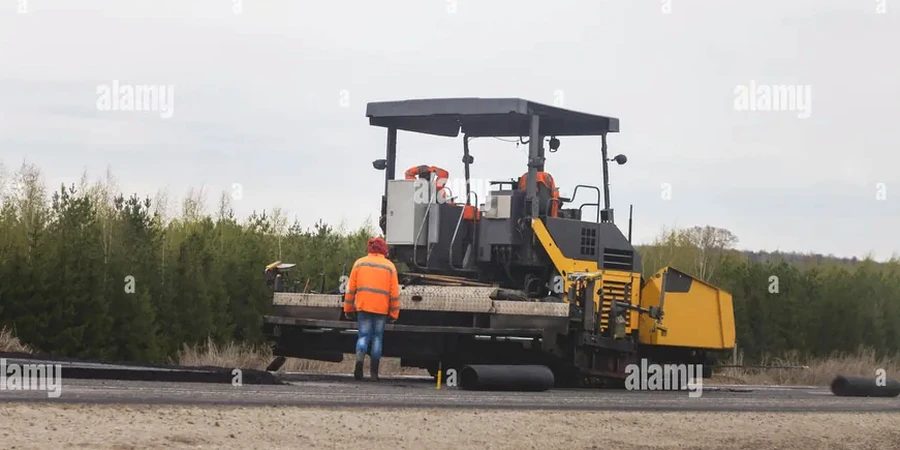
Technical reference image — Sunnyvale
Regional considerations
Sunnyvale lies in a region with liquefiable sand layers, per the USGS seismic hazard maps. A flexible pavement design that ignores this risk can suffer differential settlement during a moderate earthquake. In older industrial zones near the Caltrain corridor, we've encountered loose fills that amplify ground motion. Our approach includes evaluating the subgrade's cyclic strength and, where needed, recommending a lime-cement stabilization treatment for the upper 2 feet. This reduces post-seismic deformation without adding structural thickness.
We log soil profiles through test pits and perform CBR tests on undisturbed samples to establish design subgrade moduli.
02
Traffic Load Analysis
We estimate equivalent single-axle loads (ESALs) based on projected truck traffic and parking usage to determine structural number.
03
Layer Thickness Design
Using AASHTO 1993 methodology, we calculate required asphalt and base course thicknesses for given subgrade conditions and traffic.
04
Drainage and Subgrade Improvement
We design edge drains, subdrains, or chemical stabilization where high water table or weak soils threaten pavement life.
Standards that apply
AASHTO Guide for Design of Pavement Structures (1993), ASTM D1883 (CBR), ASTM D698 / D1557 (Proctor), Caltrans Highway Design Manual
Top questions
How much does flexible pavement design cost in Sunnyvale?
A full design package including subgrade investigation, CBR testing, and structural thickness calculations typically ranges from US$1,470 to US$4,900. Final cost depends on site access, number of test pits, and required lab work.
What is the difference between flexible and rigid pavement for Sunnyvale streets?
Flexible pavement (asphalt) distributes loads through layered granular bases and is more forgiving of subgrade movement. Rigid pavement (concrete) uses a stiff slab that spans weaker spots but requires joints and is costlier to repair. For Sunnyvale's clay-rich areas, flexible designs often perform better with proper drainage.
How long does a flexible pavement design take in Sunnyvale?
A typical design cycle takes 2 to 4 weeks from site visit to final report. This includes field testing, lab analysis (CBR, Proctor, gradation), and structural calculations. Urgent projects can be expedited to 7–10 days with a priority surcharge.
What geotechnical data is needed for flexible pavement design?
Key inputs include subgrade CBR or resilient modulus, soil classification (ASTM D2487), compaction characteristics, and water table depth. For roads with heavy truck traffic, we also recommend cyclic triaxial tests to evaluate permanent deformation potential.