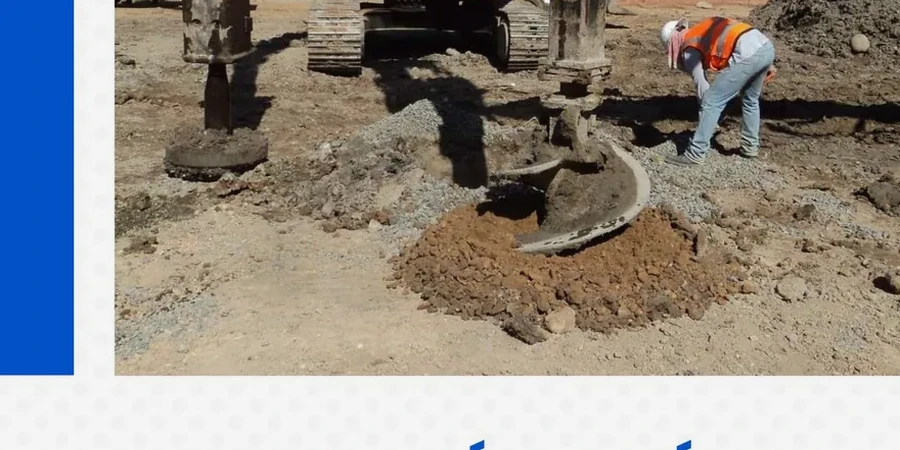
Ground improvement represents a critical branch of geotechnical engineering focused on modifying the physical and mechanical properties of soil to meet project requirements. In Sunnyvale, where rapid urban development and seismic resilience are paramount, soil improvement techniques transform weak or compressible ground into reliable foundation strata. This category encompasses a spectrum of methods—from mechanical densification and chemical stabilization to reinforcement and drainage—each tailored to specific subsurface challenges. For local engineers and developers, understanding these options is essential to mitigating settlement risks, enhancing bearing capacity, and ensuring long-term structural performance.
Sunnyvale lies within the Santa Clara Valley, an alluvial basin shaped by Quaternary sedimentation from the Santa Cruz Mountains and San Francisco Bay. The subsurface profile typically features layers of soft, saturated clays (Young Bay Mud), loose sandy lenses, and artificial fill, often underlain by more competent older alluvium. These conditions pose significant geotechnical challenges: low shear strength, high compressibility, and susceptibility to liquefaction during seismic events. The proximity to the San Andreas and Hayward fault systems amplifies the need for robust ground treatment. As a result, techniques like Deep Soil Mixing (DSM) design and stone column design are frequently deployed to address deep soft clay layers, while vibrocompaction design proves effective in densifying granular deposits to resist cyclic loading.
The regulatory framework governing ground improvement in Sunnyvale aligns with the California Building Code (CBC), which adopts the International Building Code (IBC) with state-specific amendments, alongside the City of Sunnyvale's local ordinances. Geotechnical investigations and design must comply with ASCE 7 standards for seismic design and the California Geological Survey guidelines. For projects involving deep mixing or grouting, environmental regulations from the California Environmental Protection Agency (CalEPA) and the Regional Water Quality Control Board oversee potential groundwater impacts. Adherence to these codes ensures that improvement methods meet performance criteria for settlement, stability, and durability, particularly in critical infrastructure and high-occupancy structures.
Projects requiring ground improvement in Sunnyvale span a wide range: from tech campus expansions and mid-rise residential buildings to public works like the Sunnyvale Cleanwater Program and transportation corridors. Sites with compressible clays beneath proposed embankments often benefit from preloading design to accelerate consolidation without surcharge, while brownfield redevelopments may necessitate grouting design for soil stabilization or groundwater control. In areas with variable fill and organic soils, geogrid specification enhances subgrade and slope performance. Each project demands a site-specific approach, integrating subsurface data, structural loads, and performance timelines to select the optimal technique or combination of methods.
Ground improvement encompasses techniques to enhance soil strength, stiffness, and drainage characteristics. In Sunnyvale, it becomes necessary when subsurface conditions—such as soft Bay Mud or loose artificial fill—cannot support proposed structures without excessive settlement or pose liquefaction risks during earthquakes. Typical triggers include low bearing capacity, high compressibility, or seismic vulnerability.
Sunnyvale's alluvial geology, with interbedded clays, silts, and sands, dictates method selection. Soft, saturated clays respond well to Deep Soil Mixing or stone columns, while loose granular soils are better suited to vibrocompaction. The depth of problematic strata, groundwater levels, and proximity to sensitive structures further refine the decision, requiring thorough geotechnical investigation.
Projects must comply with the California Building Code, local Sunnyvale ordinances, and environmental regulations from CalEPA and the Regional Water Quality Control Board. Depending on the method, permits may address groundwater discharge, dust control, and noise. Seismic design criteria per ASCE 7 are mandatory, and geotechnical reports typically require city review before construction.
In many cases, yes. Techniques like stone columns, DSM, or controlled preloading can increase bearing capacity and reduce settlement to levels acceptable for shallow foundations. However, the feasibility depends on soil conditions, structural loads, and performance criteria. A detailed analysis determines whether improved ground can substitute for piles or caissons.
We serve projects across Sunnyvale.